Introduction: The Power Behind the Performance
The Formula 1 engine is the most complex and advanced piece of machinery in motorsport. It’s not just about raw horsepower—modern F1 engines represent a perfect synergy between mechanical engineering, hybrid energy recovery systems, and data-driven optimization. In this blog, we’ll break down everything you need to know about F1 engine specifications and how these power units make F1 cars some of the fastest machines on Earth.
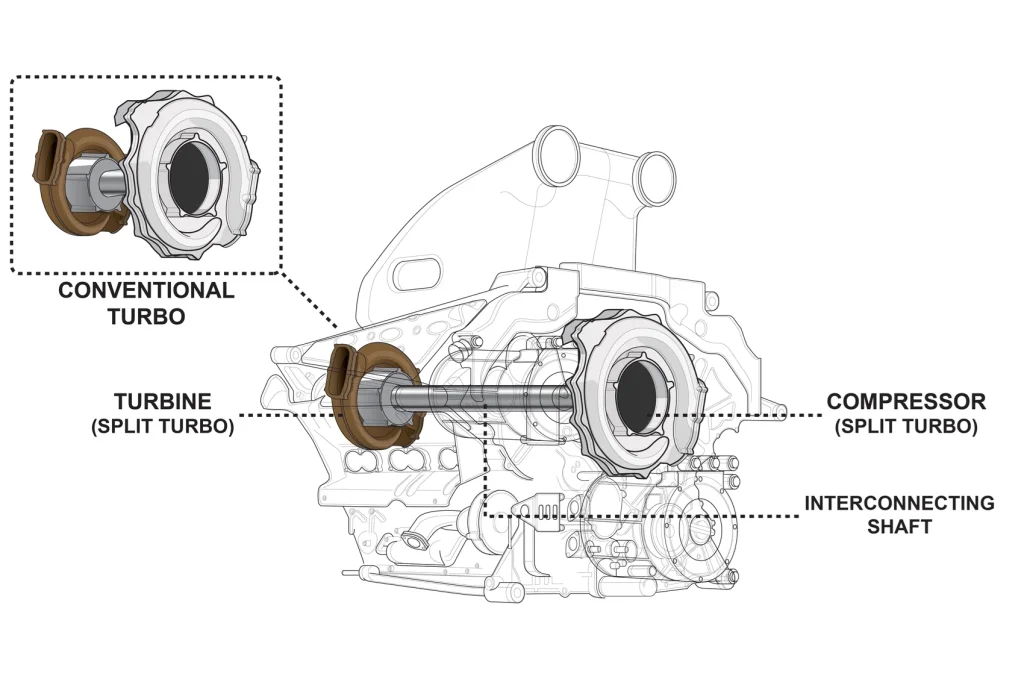
1. Internal Combustion Engine (ICE)
At the core of an F1 power unit is a 1.6-litre V6 turbocharged internal combustion engine (ICE).
Key Features:
- Displacement: 1.6 litres
- Configuration: V6 (6 cylinders arranged in a V-shape)
- Turbocharged: Increases power output by forcing air into the engine
- Rev Limit: ~15,000 RPM (though limited to ~12,000 RPM in races)
- Fuel: FIA-approved high-performance E10 fuel (10% ethanol blend)
Despite its small size, the ICE produces over 600 horsepower due to extreme compression and thermal efficiency.
2. Turbocharger – Boosting Performance
The turbocharger compresses air before it enters the combustion chamber, allowing for more oxygen and, thus, more power.
- Located between the engine’s V to reduce energy loss
- Works in tandem with the MGU-H for efficient energy recovery
- Creates the iconic F1 “whistle” sound
3. Hybrid Systems – MGU-K and MGU-H
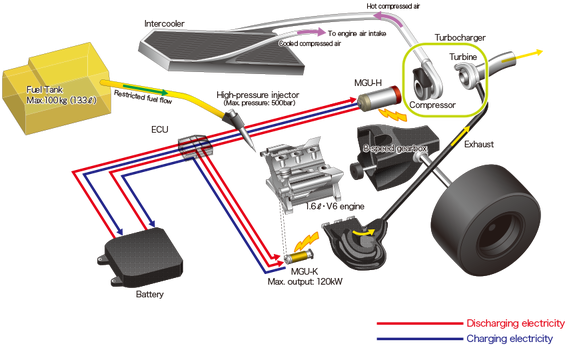
Modern F1 engines are not just about fuel combustion—they also convert heat and kinetic energy into electrical power, using two core systems:
MGU-K (Motor Generator Unit – Kinetic)
- Recovers kinetic energy during braking
- Converts energy into electricity and stores it in the battery
- Can redeploy up to 120 kW (~160 hp) for acceleration
MGU-H (Motor Generator Unit – Heat)
- Recovers heat energy from the turbocharger
- Either stores it or sends it directly to the MGU-K
- Eliminates turbo lag and increases fuel efficiency
Together, these hybrid systems contribute up to 160 additional horsepower, dramatically enhancing performance without increasing fuel use.
4. Energy Store (Battery)
The energy recovered from MGU-K and MGU-H is stored in a lithium-ion battery, referred to as the Energy Store (ES).
- Weight: ~20 kg
- Capacity: Regulated under FIA rules
- Role: Discharges energy to MGU-K for extra acceleration
- Must be incredibly efficient to survive high temperatures and vibration
5. Control Electronics (CE)
Each F1 car has a standardized Electronic Control Unit (ECU) provided by McLaren Applied Technologies.
Functions:
- Monitors all engine parameters in real-time
- Controls hybrid deployment strategies
- Manages energy harvesting and fuel injection
- Communicates with the pit wall for live data updates
6. Fuel and Lubricants – Science in Every Drop
While the engine is limited to 110 kg of fuel per race, the fuel composition is tightly controlled.
- Modern F1 fuel is similar to premium unleaded but enhanced for energy density
- Lubricants are tailored to reduce friction and heat
- Major partners include Petronas (Mercedes), Shell (Ferrari), and ExxonMobil (Red Bull)
7. Cooling System – Keeping It Cool Under Pressure
With massive heat generation, effective cooling is essential:
Overheating can cause immediate engine failure4. Energy Store (Battery)
The energy recovered from MGU-K and MGU-H is stored in a lithium-ion battery, referred to as the Energy Store (ES).
- Weight: ~20 kg
- Capacity: Regulated under FIA rules
- Role: Discharges energy to MGU-K for extra acceleration
- Must be incredibly efficient to survive high temperatures and vibration
8. Transmission & Gearbox
F1 engines are mated to a semi-automatic, 8-speed sequential gearbox.
- Controlled by paddle shifters on the steering wheel
- Gear shifts occur in milliseconds
- Gear ratios are fixed for the season
- Includes a reverse gear (required by FIA)
9. Engine Lifespan and Usage Regulations
Each driver is limited to a certain number of engine components per season:
- ICE, MGU-K, MGU-H, Turbo, CE, ES
- Exceeding limits results in grid penalties
- One engine must last several races—endurance meets performance
10. Power Output: Total Horsepower
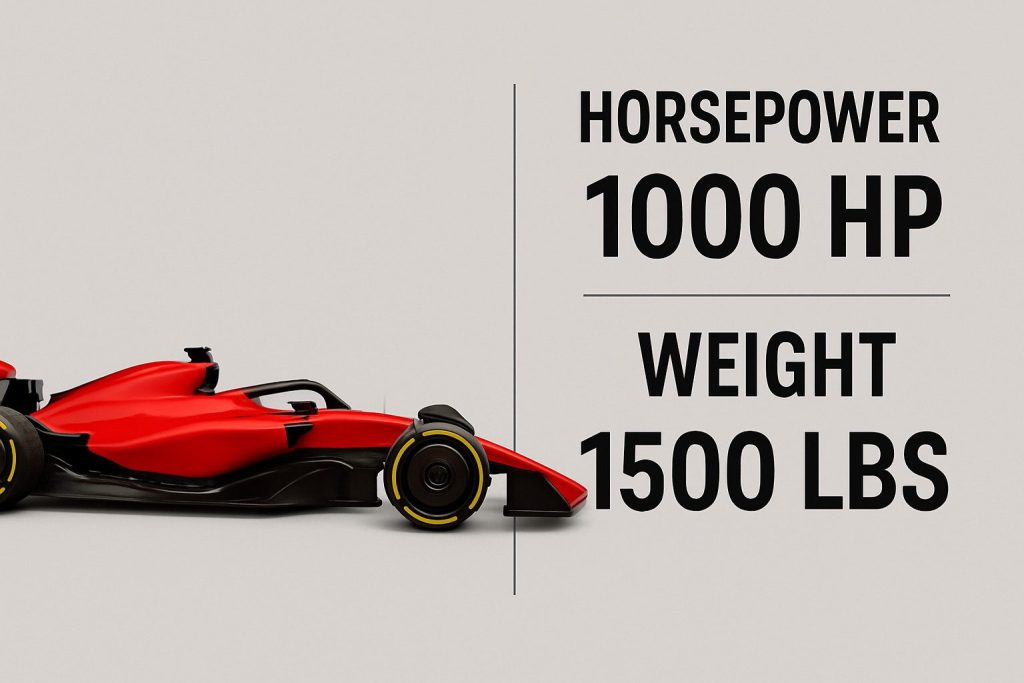
- ICE Alone: ~600–700 hp
- Hybrid Systems: +160 hp
- Total Output: ~1,000 hp
- Top Speeds: Up to 360 km/h (224 mph)
This power, combined with lightweight construction and advanced aerodynamics, allows F1 cars to achieve world-class acceleration and cornering speeds.
Conclusion: Engineering Perfection on the Limit
The Formula 1 engine is not merely an engine—it’s a power unit, a hybrid of cutting-edge engineering disciplines, sustainability principles, and computational precision. With every year, F1 power units evolve toward being faster, greener, and more reliable. For fans and engineers alike, understanding these machines is key to appreciating the true art of Formula 1 racing.
Internal Linking Suggestions:
- Link to Blog 5: “How F1 Aerodynamics Work”
- Link to Blog 22: “F1 Car Cost Breakdown – What Makes It So Expensive?”
- Link to Blog 27: “Red Bull Racing: Engineering Dominance in the Hybrid Era”